
Bay of Cadiz

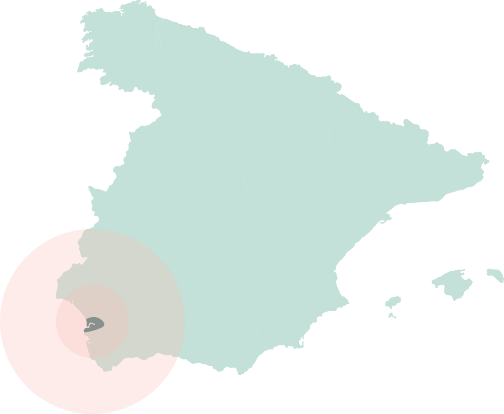
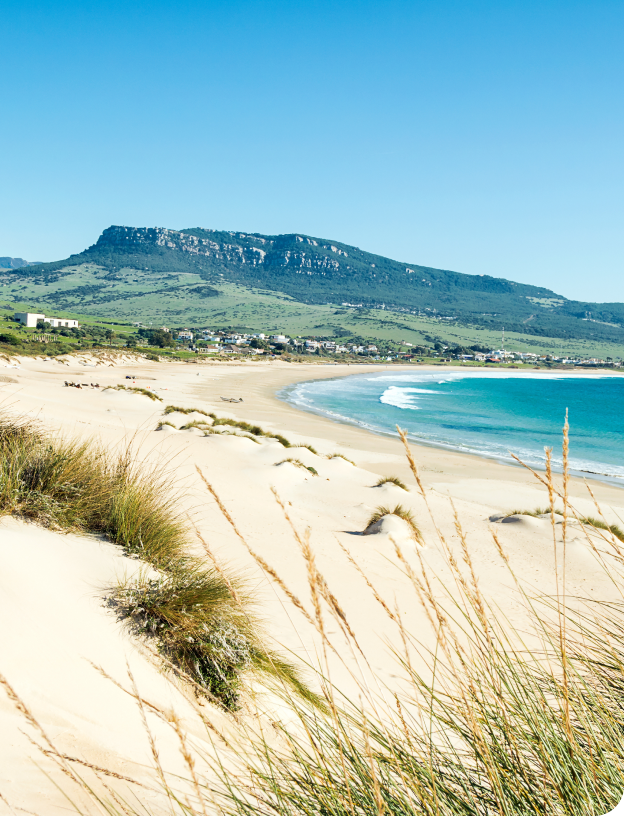
The Bay of Cádiz, located in southwestern Spain, is a shallow coastal system composed of tidal flats, saltmarshes, dunes and historic saltworks. The area is part of both the Ramsar and Natura 2000 networks and provides critical habitats for migratory birds and marine species. However, intense urbanization, infrastructure development and complex governance structures have limited large-scale restoration initiatives.
Within REWRITE, the Cádiz demonstrator investigates the potential for rewilding degraded marshes and abandoned salterns, highlighting how ecosystem restoration can support climate adaptation, biodiversity recovery and sustainable coastal livelihoods.

Characteristics

Habitat Types in Cadiz Bay

27%

Microphytobenthos

53%

seagrass meadows

11%

Salt marsh

Historical trajectories

  • Great pressure due to the high density of urban areas and infrastructures in the direct environment of the marshes of the Bay of Cádiz.
  • Constant conflicts between uses and activities and between those and the conservation of ecosystems.
  • Demographic pressure for a constant urban expansion in a population with serious socio-economic problems.
  • Lack of sensitivity of the society of the Bay of Cádiz on the role intertidal and marsh ecosystems play in their well-being.
  • Lack of knowledge of the services offered by these ecosystems, little appreciation of the efforts that the administration must carry out for their conservation.
  • Lack of political interest, causing a deficit in the allocation of economic and human resources for its management.
  • The area has a great administrative legal complexity with multiple regulations and administrative provisions (DPMT, ENP, Ports, PGOU, etc.), multiple administrations with sometimes divergent priorities, and unresolved management problems.
  • Conservation (& restoration) of species and habitats in times of rapid changes and increasing human pressures, such as climate change.

Main objectives

  1. 1
    Improve understanding of marsh and tidal flat ecosystem functioning
  2. 2
    Explore rewilding potential of degraded marshes and abandoned salterns
  3. 3
    Support rewilding as ecosystem-based management based on stakeholder cooperation

Past, current and future restoration actions

Contact Person

Main contact
Sokratis Papaspyrou