Rewilding across gradients: connecting ecosystems, people and projects at SER Europe 2026
by Vona Méléder and Charlotte Hopkin
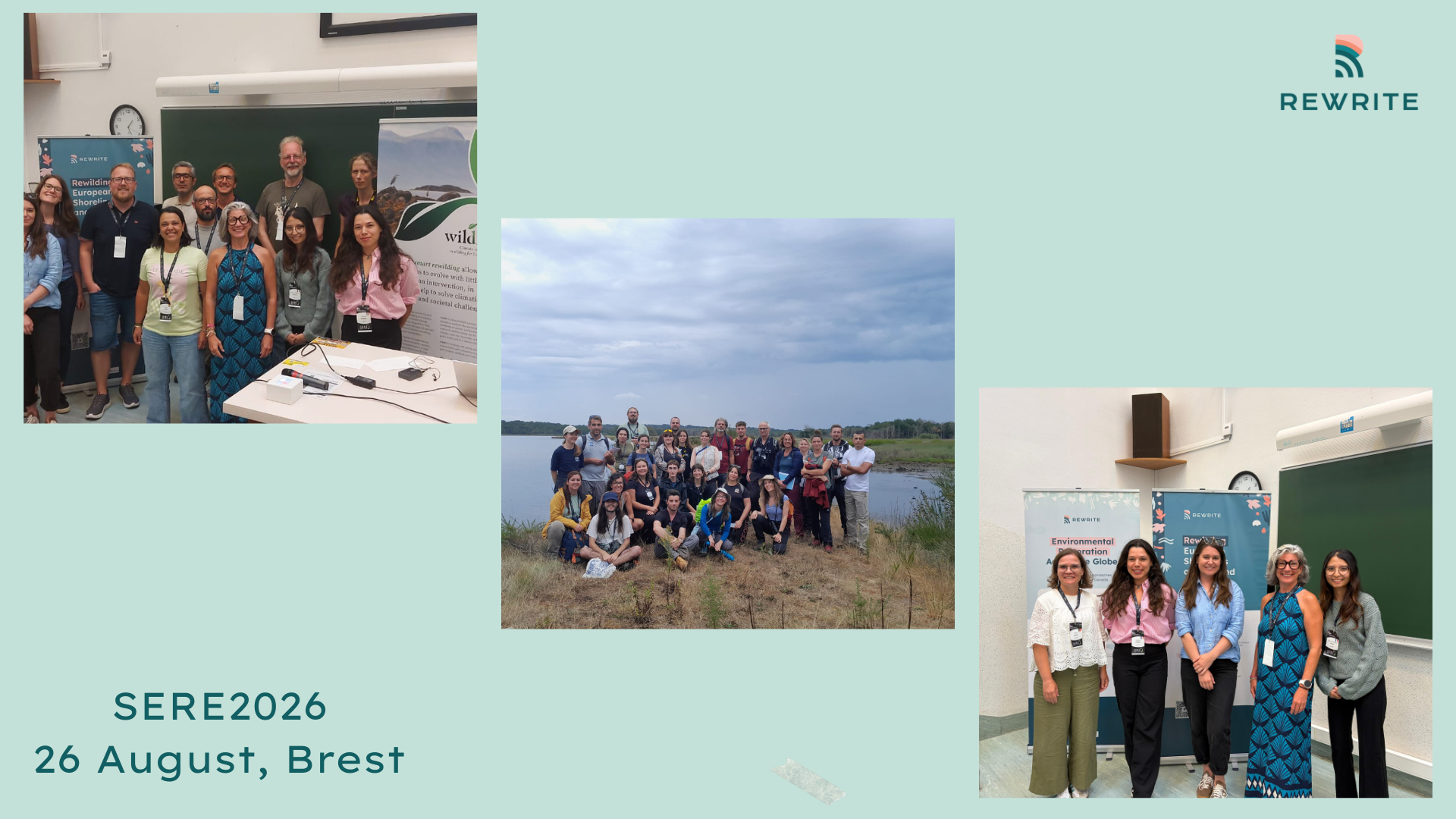
Under the Brest sunshine, the 15th European Conference on Ecological Restoration provided a perfect setting to explore the many faces of rewilding. Thanks to the organisation of SER Europe, our special session, “Rewilding across gradients: choosing pathways and measuring success in a changing world”, gathered more than 50 participants for three hours of presentations, posters and lively discussion. Senior and early-career researchers, practitioners and policymakers joined the conversation, reflecting both the growing interest in rewilding and the diversity of communities now engaging with it.
The session was co-organised by the three Horizon Europe sister projects REWRITE, wildE and WILDCARD. Our collaboration started well before Brest and reflects a shared conviction: understanding and implementing rewilding requires us to work beyond the boundaries of individual projects, disciplines and ecosystems. Ecological processes do not stop at the edge of a forest, a river, a wetland or the coastline. Effective restoration therefore requires connectivity not only between habitats along the land–sea continuum, but also between scientific communities, practitioners, decision-makers and society. We deliberately wanted the conversation to extend beyond our three projects. The session therefore brought together contributions from inside and outside REWRITE, wildE and WILDCARD, around three apparently simple questions
- WHERE can we rewild?
- HOW should we rewild?
- DOES IT WORK?
WHERE? Rewilding across gradients
The first question — where should we rewild? — led to a strong common message: rewilding is not spatially neutral. Its potential, and the trajectories it may generate, are strongly shaped by environmental conditions, ecosystem history and previous land use.
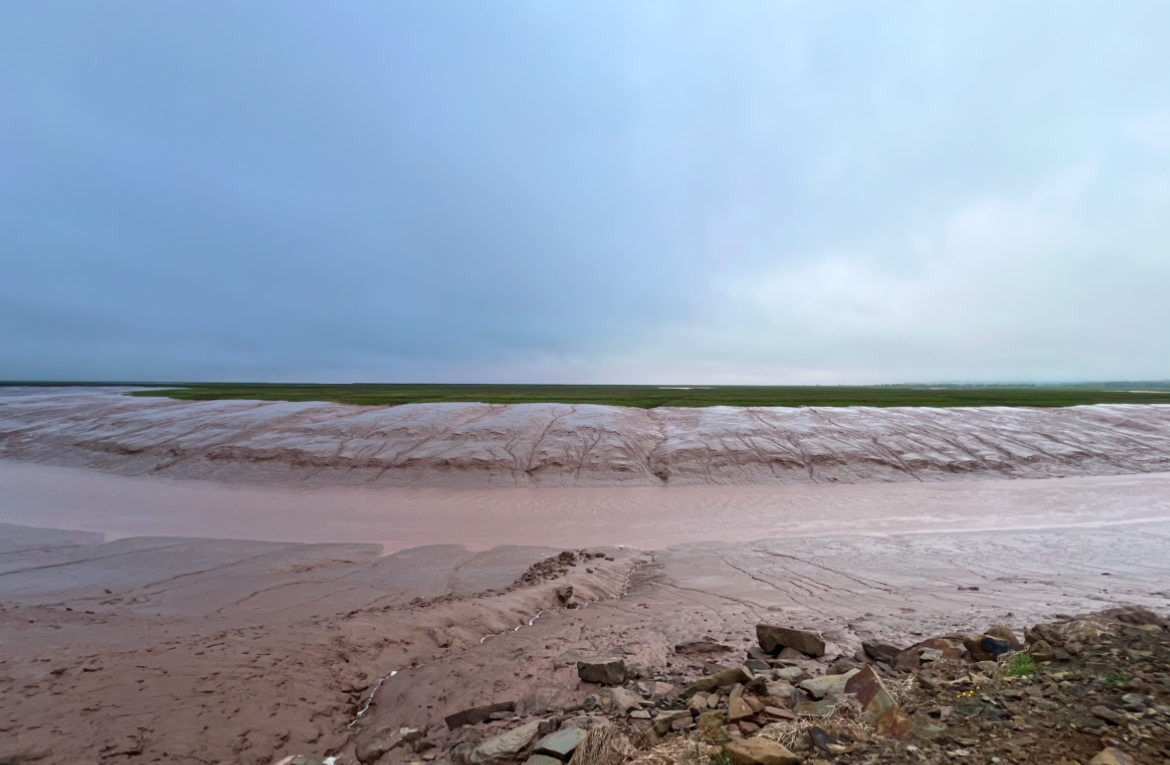
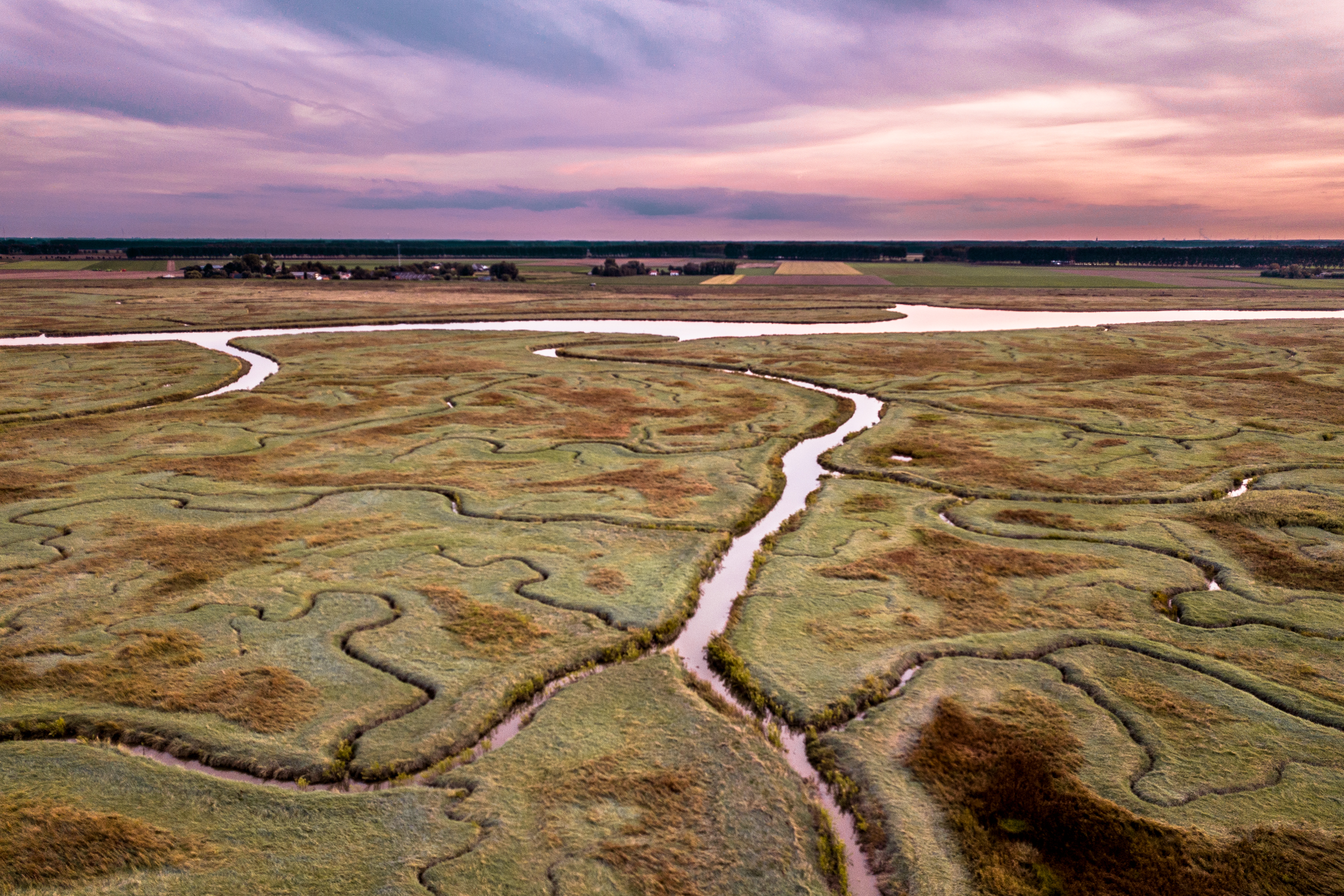
This was remarkably consistent across very different ecosystems. In coastal wetlands, environmental gradients such as salinity, elevation, inundation or sediment dynamics can determine which habitats emerge following reconnection with natural tidal processes and how biodiversity, carbon dynamics and ecosystem functioning recover. On land, the same context dependency is apparent after agricultural abandonment: soil carbon accumulation varies with previous land use, the vegetation that subsequently develops, climate and soil conditions. Former croplands developing towards broadleaf or mixed forests, for instance, can become substantial soil-carbon sinks, particularly under warmer conditions, whereas the same response is not necessarily observed in abandoned grasslands. The potential benefits of proforestation are similarly dependent on forest type and environmental setting.
Together, these findings remind us that there is no single rewilding pathway that can simply be transferred from one place to another. Asking “where to rewild?” inevitably means asking “under which conditions?” Similar actions may lead to very different trajectories depending on where they take place.
This also raises an important challenge for scaling up rewilding. If we want to identify where it can deliver the greatest ecological and climatic benefits, we need to understand these gradients much better. Yet major geographical gaps in available evidence remain, making it difficult to extrapolate existing knowledge across Europe with confidence.
In short, context and gradients shape both rewilding potential and rewilding trajectories.
HOW? Choosing rewilding pathways
The second question — how should we rewild? — challenged another widespread assumption: that rewilding can simply be equated with stepping back and doing nothing.
Across marine and terrestrial ecosystems, the contributions instead revealed a continuum of possibilities between passive recovery and active intervention. In some situations, reducing human control may be sufficient to allow ecological processes to recover. In others, targeted interventions may be needed to remove barriers to recovery or prevent ecosystems from moving towards undesirable trajectories.
This is particularly evident where several pressures interact. Land abandonment, for example, can create opportunities for natural succession, while at the same time increasing fuel accumulation and wildfire risk or facilitating invasive species. Similarly, marine rewilding may require habitat restoration, spatial protection, reduced pressures or the restoration of ecological connections before natural processes can regain a greater role. Rewilding therefore does not necessarily mean the absence of human intervention; rather, intervention can sometimes be used precisely to create the conditions for natural processes to take over.
But the choice of pathway is not only an ecological decision. The contributions also converged on another fundamental point: people, livelihoods, values and institutions are part of rewilding, not external constraints to it. In practice, rewilding and active management are not necessarily opposing approaches. Many initiatives combine space for natural processes with different forms of intervention and governance, depending on local ecological and societal conditions. What that combination looks like depends on the territory. It may involve balancing natural regeneration with wildfire prevention and the maintenance of valued cultural landscapes, managing coexistence between people and recovering wildlife, or negotiating the future of marine spaces among communities and other users. Participation, collaboration and the negotiation of trade-offs therefore become integral components of the rewilding pathway itself. Without them, ecological ambitions may lose social legitimacy and become difficult to sustain over the long term.
Rewilding emerges here not as a fixed management prescription, but as an adaptive and context-dependent process combining natural dynamics, targeted intervention and governance.
DOES IT WORK? Measuring rewilding success
And finally: does it work?
This apparently simple question may actually be the hardest of the three, because answering it first requires us to decide what we mean by « success ».
A first strong message was that biodiversity alone cannot provide the answer. Rewilding can simultaneously affect ecosystem functioning, climate regulation, connectivity and other ecological processes, but also livelihoods, wellbeing, cultural relationships with landscapes and many other contributions of nature to people. Evidence gathered across rewilding studies suggests predominantly positive effects on biodiversity, climate, ecosystem functioning and social outcomes, while also revealing important differences in how well these different dimensions have been studied.
Measuring success therefore requires a multidimensional view. It also means looking beyond ecosystem states towards the processes that make ecosystems more complex, connected and self-sustaining. Connectivity, trophic complexity, disturbance regimes and the degree of human pressure or control can all help reveal whether a system is actually moving along a rewilding trajectory.
But this does not mean measuring everything. Experience from large-scale restoration initiatives points towards a more pragmatic lesson: fewer, well-chosen indicators are often more informative than a long list of poorly monitored ones. Robust baselines, appropriate controls, sufficient replication and the capacity to analyse and maintain monitoring over time are essential if indicators are to tell us something meaningful about change.
And time may be the crucial word here. Rewilding is about trajectories, and ecological trajectories rarely fit neatly within the duration of a research project. Some responses can be observed within a few years; others may take decades. Monitoring therefore needs to acknowledge these different timescales, rather than expecting all outcomes to become measurable within the lifetime of a project.
But perhaps rewilding invites us to go one step further and question our need to monitor everything, everywhere. If rewilding is about restoring ecological processes, reducing long-term human control and allowing ecosystems — and their relationships with societies — to develop along partly unpredictable trajectories, should every change necessarily be measured against a predefined expectation of success? In some places, perhaps the most coherent approach is precisely to step back: to allow ecological and social processes to unfold without continuously asking whether they are producing the outcomes we anticipated.
This does not mean that monitoring has no value. It remains essential where we need to understand mechanisms, learn from interventions, detect undesirable trajectories, or demonstrate particular ecological, climatic or societal effects. But monitoring for knowledge is not necessarily the same as monitoring to judge success. Rewilding may also require accepting uncertainty, surprise and outcomes that we did not define in advance.
So perhaps “Does it work?” is not always the right question. In some contexts, we may need to ask what is changing and what we can learn from it. In others, we may simply need to create the conditions for natural processes to recover — and then give them the space and time to unfold.
Sometimes, rewilding may also mean resisting our desire to measure, control and judge every outcome. Let nature take its course.
The future of rewilding science and practice
The three presentation blocks were followed by an open discussion on the Future of Rewilding Science & Practice, moderated by Charlotte Hopkins from the University of Hull, UK.
This discussion highlighted both the growing interest in rewilding, particularly in coastal and marine ecosystems, and the continued debate surrounding what rewilding means in practice. A key discussion theme was the diversity of interpretations among both academics and practitioners around the extent to which human intervention and human communities are compatible with rewilding. Some participants noted persistent misunderstandings that rewilding means removing people or excluding human activities from landscapes and seascapes. Our panel emphasised that people are not separate from rewilding but are central to its success, with the appropriate balance between natural processes, intervention and human use depending strongly on the ecological and socio-economic context.
Community involvement in rewilding initiatives emerged as particularly important. Participants highlighted the need to engage local communities and stakeholders early in the rewilding process. Several positive examples were discussed, including initiatives in coastal settings where communities, practitioners and researchers are working together helping to build understanding, legitimacy and support for rewilding.
Monitoring was another major focus of the discussion. Participants agreed on the importance of monitoring rewilding trajectories to understand whether interventions are achieving their intended outcomes. However, questions remain about what should be monitored, over what timescales, and which indicators best capture ecological, climatic and socio-economic outcomes. The discussion therefore highlighted the need for monitoring approaches that are practical, sufficiently long-term and capable of capturing change across complex and dynamic rewilding systems. Overall, the panel reinforced the importance of context, participation and robust evidence in advancing rewilding science and practice.
Connecting ecosystems means connecting people and knowledge
After three hours of presentations, posters and discussion, we certainly did not have definitive answers to our three questions. But perhaps that was precisely the point.
WHERE we rewild influences HOW we can rewild. HOW we rewild shapes the trajectories that become possible. And asking whether IT WORKS forces us to think about what we expect from rewilding in the first place — and whether all those expectations should necessarily be defined in advance.
What emerged from the session is therefore a vision of rewilding that is less about applying a recipe or reaching a predefined ecological endpoint, and more about creating the conditions for ecological processes to recover, while learning when to accompany them — and when to step back.
This also brings us back to the reason why REWRITE, wildE and WILDCARD are working together. Our projects approach rewilding through different ecosystems, scales and perspectives — from forests and abandoned agricultural land to wetlands, estuaries, coasts and the sea. But nature does not recognise these disciplinary or project boundaries. Processes move across landscapes and seascapes, along environmental gradients and across the land–sea continuum.
If we want to restore ecological connectivity, we therefore also need to reconnect the way we think and work: across ecosystems, across disciplines, across projects, and between researchers, practitioners, policymakers and communities.
And perhaps this is one of the most important things rewilding can help us rethink: our own place within nature. Not as external managers deciding what nature should become, nor as passive observers standing outside it, but as one component of socio-ecological systems whose trajectories we influence and with which we evolve.
Reconnecting ecosystems also means reconnecting knowledge and people — and reconnecting ourselves with nature.
Brest was another step along that pathway — and certainly not the last.